
We are not creating a Utopia at Killick Ecovillage
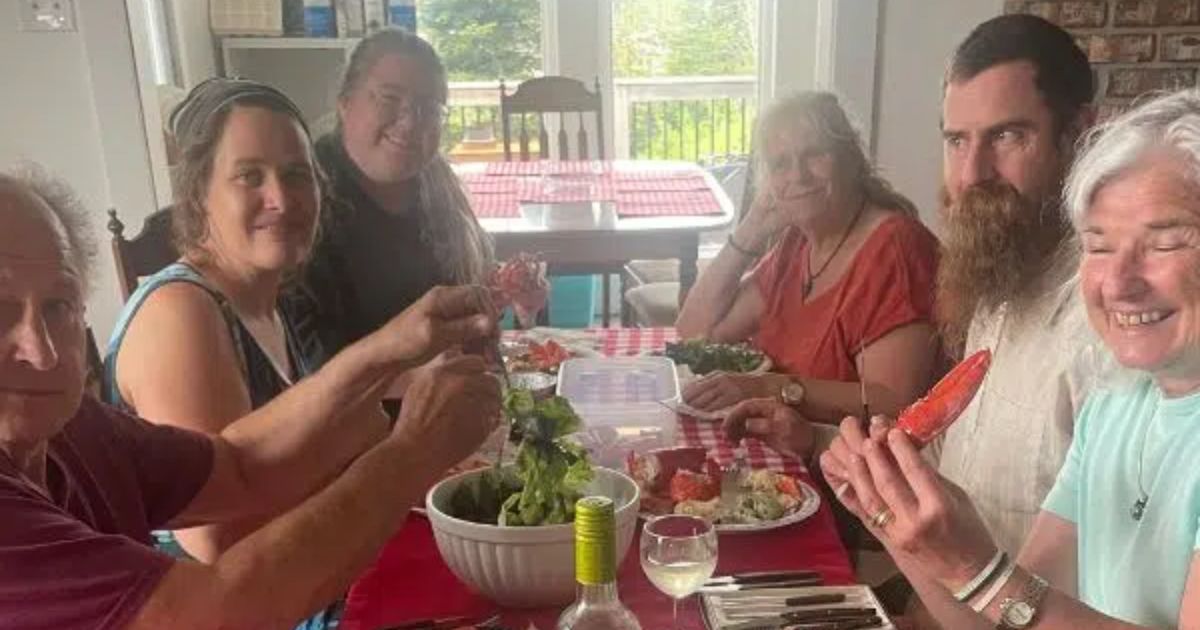
Sometimes our morning reading feels like it was written directly for us. Elizabeth Oldfield’s essay in the NY Times about coliving – “Your Social Muscles are Wasting Away” – spoke directly to the part of me that wants both belonging and control. As a future resident member of Killick Ecovillage, I am choosing cohousing on purpose – not as a cute fantasy or a “someday” idea, but as my choice of how I want to live in the world.
Oldfield has chosen to live in a 1,900-square-foot terraced house that fits her husband and their two kids, a couple expecting a baby, another woman, and a cat.
By any measure, that is a model of coliving at its most intimate – and far from the choice we are making here at Killick Ecovillage, where we will have 51 homes ranging from 600sqft to 1400sqft and 6000 square feet in 2 shared amenities buildings referred to as the “Common Houses” on 57 acres of land.
Still, there are valuable lessons to be learned from her experience.
She writes: “Those of us living in the industrialized West have outsourced more and more of our needs to the market and increasingly avoid ties of mutual obligation in favor of frictionless transactions. The result is that we spend less time together, ask for and give help less often, and find forming and negotiating social bonds more difficult….The fallout from this social atrophy is a generation of humans who are more lonely, mistrustful, and wasteful of our planet’s resources than any that came before us.”
When we choose co-living, we are saying yes to mutual obligation – and occasional friction. Oldfield writes about “loosening your grip on your preferences”.
“It has also forced me to confront just how powerfully our culture discourages compromise. Fighting for your preferences is often framed as an almost moral act — a way to assert your autonomy or love yourself. After a long day of work, child care, and cooking, having to clean up after myself immediately so someone else can use the kitchen can feel like an imposition. But with every passing year I live alongside others, I am increasingly able to call bull on that voice inside my head. I know now that the relentless enhancement of experience does not usually bring inner peace.“
Modern life trains us to treat friction as failure. If something is annoying, we pay to have it removed. If someone is difficult, we ghost them. If a system doesn’t suit us perfectly, we opt out. We’re encouraged to curate everything: our social media feeds, our schedules, our friendships, our homes. And the result is a life that can feel clean and efficient, but also strangely… lacking. Lonely, even when we’re busy.
As Melissa Kirsch writes in “Acquired Tastes“, a response to Oldfield’s essay, “Our grip on our preferences can be so tight that our lives constrict around it.
Cohousing pushes back on that. It says: You don’t get to be the only person in the room. It asks us to build emotional strength the way you build physical strength. Not by avoiding strain, but by working with it. That’s what “relational muscle” really is. The willingness to tolerate small discomforts in service of a bigger kind of comfort: being known, being needed, being part of something that isn’t fragile.
Cohousing is about building a life where your needs can be held by others, and where you also hold theirs. Mutual obligation doesn’t mean constant self-sacrifice. It means we stop pretending we can be fully human without each other.
I love that Oldfield doesn’t pretend communal living is utopia. Because it’s not. The dream is not “perpetual dinner party.” The dream is “someone notices if you’re not okay.” The dream is, “your life doesn’t collapse if you get sick, or lose a job, or have a bad season.” The dream is, “there’s always someone in the house, and you’re not always the one who has to be strong.”
And honestly, that’s what draws me to Killick. Not the fantasy of living in perfect harmony, but the practice of belonging. The daily choice to stay in relationship with my neighbours, even when it’s inconvenient. The choice to be a person who can share space, share power, share responsibility.
Optimizing your life around your preferences can feel like peace, but it often ends in isolation. Instead, as Kirsch writes: “We like the idea of ourselves as people who can share and compromise, who prioritize community over comfort. Deep down, we don’t want to be hothouse flowers, requiring very specific conditions in order to bloom.”
I want to be sturdy. I want to bloom in real-life conditions – even in the depths of a blustery Newfoundland winter day!
And cohousing, at its best, is real. Not always comfortable. Not always quiet. Sometimes messy. Sometimes hilarious. Sometimes hard. But alive. And connected. And worth it.